

Research project details
- P.I.: Nadia Aleotti
- Funding: “Progetti per Avvio alla Ricerca” programme of Sapienza University of Rome
- Year: 2025
- Protocol no.: AR225199AE532AD8
- Participants:
- Nadia Aleotti, P.I. nadia.aleotti@uniroma1.it
- Julian Bogdani, Tutor julian.bogdani@uniroma1.it
Abstract
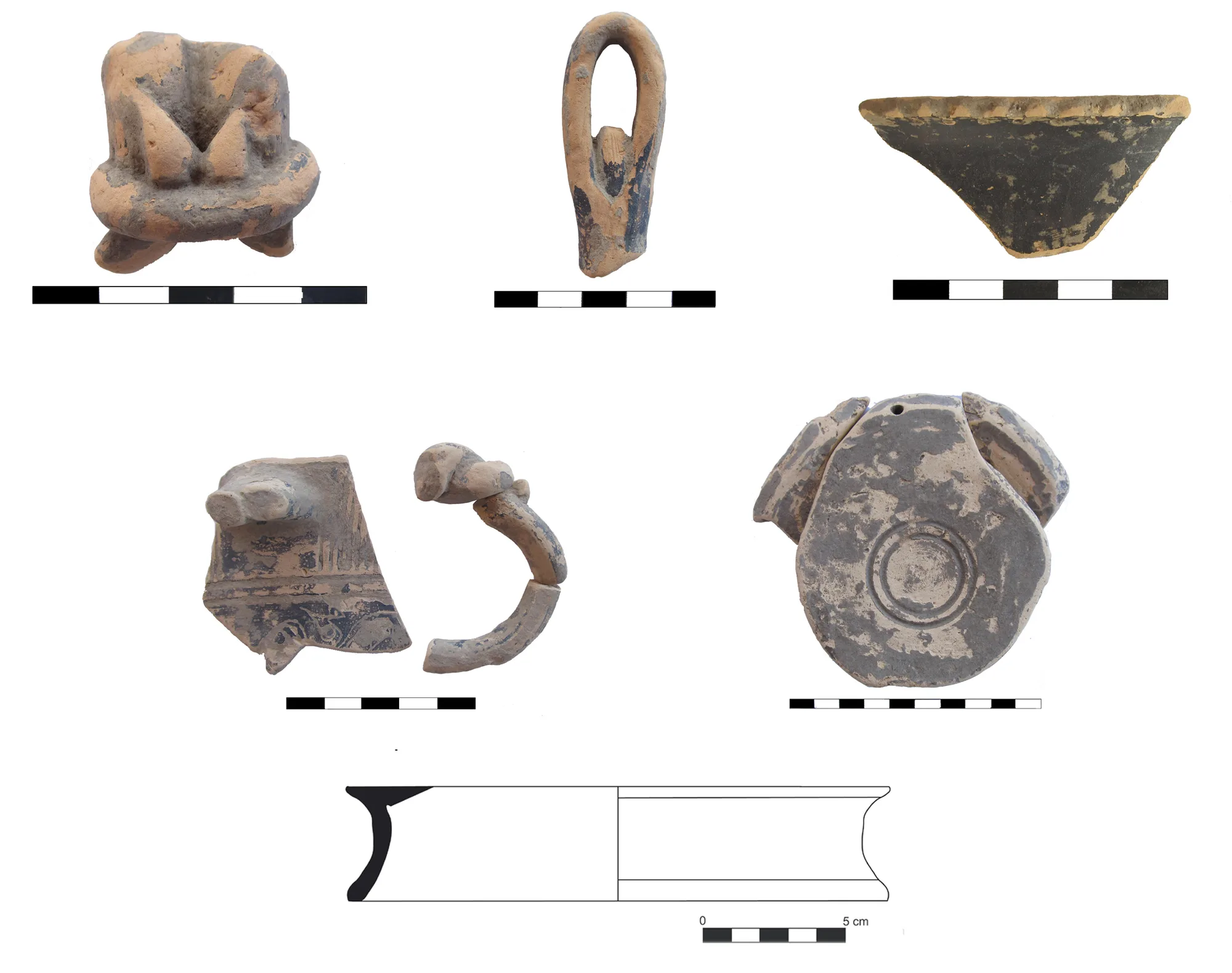
The proposed research originates within the Sapienza University of Rome Archaeological Mission in southern Albania, at the site of Çuka e Ajtoit, and focuses on the materials from a number of specific contexts identified by the ongoing investigations (2023-2025 excavations). These are levelling layers in which disused votive offerings from a sacred area were accumulated, corresponding to a reorganisation of the area of the so-called “Palace”. This monumental Hellenistic complex has been known since the earliest investigations at the site at the beginning of the last century, but the interpretation of its functions remains problematic. The materials from the deposits identified here are of particular interest for several reasons. These are contexts datable to the 3rd - first half of the 2nd century BC, which will above all provide a picture of the material associations for this specific chronological span. The chrono-typological study, complemented by the archaeometric characterisation of the fragments, will then form the basis for further exploring their significance as objects linked to sacred functions and specific ritual practices, which the research will attempt to reconstruct, both in relation to the cult to which they were originally connected and to the moment of their disposal and intentional deposition in the levelling layers accompanying the repurposing of the area. From this point of view, the case of Çuka e Ajtoit represents a unique example within the regional panorama of the archaeology of cult, owing to the quantity and quality of the materials yielded by these deposit-contexts. Finally, the plausibly public nature of the sacred contexts from which these materials originate helps to outline the complexity of the “Palace” of Çuka e Ajtoit. Starting from the study of the materials, the project will therefore be able to contribute to the new interpretation of this structure, which ongoing research increasingly indicates was a multifunctional structure central to the understanding of Hellenistic Çuka e Ajtoit.
Given the informational potential of the materials under study, three levels of analysis can be identified. The first concerns the chrono-typological study and the study of material associations, in order to determine as precise a date as possible for the creation of the deposits, and therefore for the new organisation of the “Palace” complex.
The in-depth study of the technical characteristics of the materials through archaeometric analysis will then be fundamental in determining the origin of the votive offerings. On the basis of macroscopic observation of the fabrics, the materials from these deposit-contexts appear for the most part attributable to local production, and the recognised forms are also broadly comparable with the repertoires of local/regional production. At the same time, however, many of the finds are distinguished by variants, decorations and details not otherwise attested. Should the archaeometric analyses confirm the local origin of these fragments, this would open up a new line of research into the hypothesis of specific production intended exclusively for sacred areas, and therefore not attested in other contexts.
The third aspect to be explored shifts the focus of the research from the material and formal characteristics of the objects to their significance as objects originally intended for a sacred area. The purpose of this phase of the research is to investigate the function of the votive offerings and their associations, and therefore the ritual practices attested by the materials. Also in this phase, it will be interesting to investigate the ritual practices connected with the formation of the deposit, whether it is possible to identify trends in the selection of materials, their possible intentional fragmentation, or to investigate specific modes of deposition of certain objects.
On the basis of these different levels of analysis, the aim of the project is therefore to start from the study of the materials from the deposit-contexts of Çuka e Ajtoit in order to propose a case study on the archaeology of cult in Northern Epirus.