

Research project details
- P.I.: Nadia Aleotti
- Funding: “Progetti per Avvio alla Ricerca” programme of Sapienza University of Rome
- Year: 2024
- Protocol no.: AR2231888A457752
- Participants:
- Nadia Aleotti, P.I. nadia.aleotti@uniroma1.it
- Julian Bogdani, Tutor julian.bogdani@uniroma1.it
Abstract
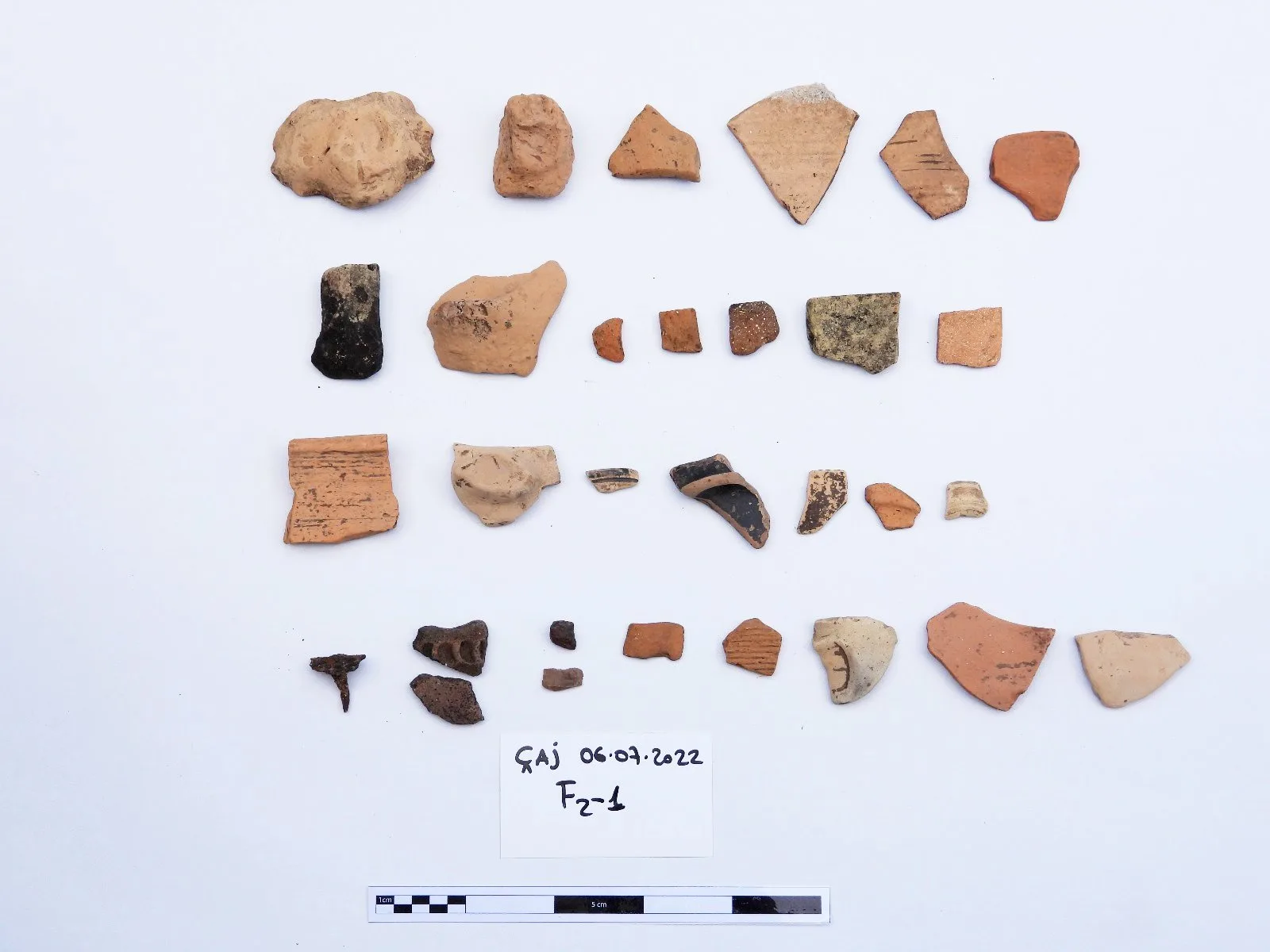
The project is set within the research activities of the Sapienza University of Rome archaeological mission in southern Albania, at the site of Çuka e Ajtoit. In particular, it is part of the material-study activities, so far focused on the data published from the various excavations that took place at the site of Çuka e Ajtoit during the twentieth century, and then on those from the survey campaigns of the joint research project between Sapienza and the Institute of Archaeology of Tirana (2022-2023), with particular attention to pottery. Given the extremely fragmentary nature of the survey materials, it immediately became clear how much the more traditional typological and morphological study, partly limited by the state of preservation of the materials, could instead be enriched by a more in-depth study of the ceramic fabrics, in order to obtain as comprehensive a picture as possible of the production attested.
The first objective of the project concerns the sampling of ceramic fabrics from the site of Çuka e Ajtoit. The research will focus first of all on the materials from the most recent activities carried out by the LAD Sapienza mission (2022 and 2023 surveys), which may however be enriched by comparison with a sampling of ceramic material also from Butrint, thanks to collaboration with the projects active at the site. Sampling will focus mainly on the earliest phases identified at Çuka e Ajtoit, above all the Hellenistic phase, which is better known and better attested by the materials, and the earlier phase represented by a few fragments of impasto pottery of Bronze/Iron Age date, which is interesting precisely because it is far less attested and studied at the regional level. Given the already broad diachronic perspective suggested by these two different periods from which the research takes its cue, it will then be interesting to extend the sampling also to the most significant fragments relating instead to the later phases (Roman, Late Antique, Medieval and Ottoman-Venetian) in order to observe continuities and transformations in the characteristics of local production and its relationship with imports, which can be better defined through fabric analysis. With the same diachronic perspective, on the basis of this preliminary sampling, a number of significant samples will then be selected for mineralogical-petrographic analysis by means of thin-section optical microscopy, in order to obtain a detailed characterisation of the inclusions present, the matrix and the porosity.