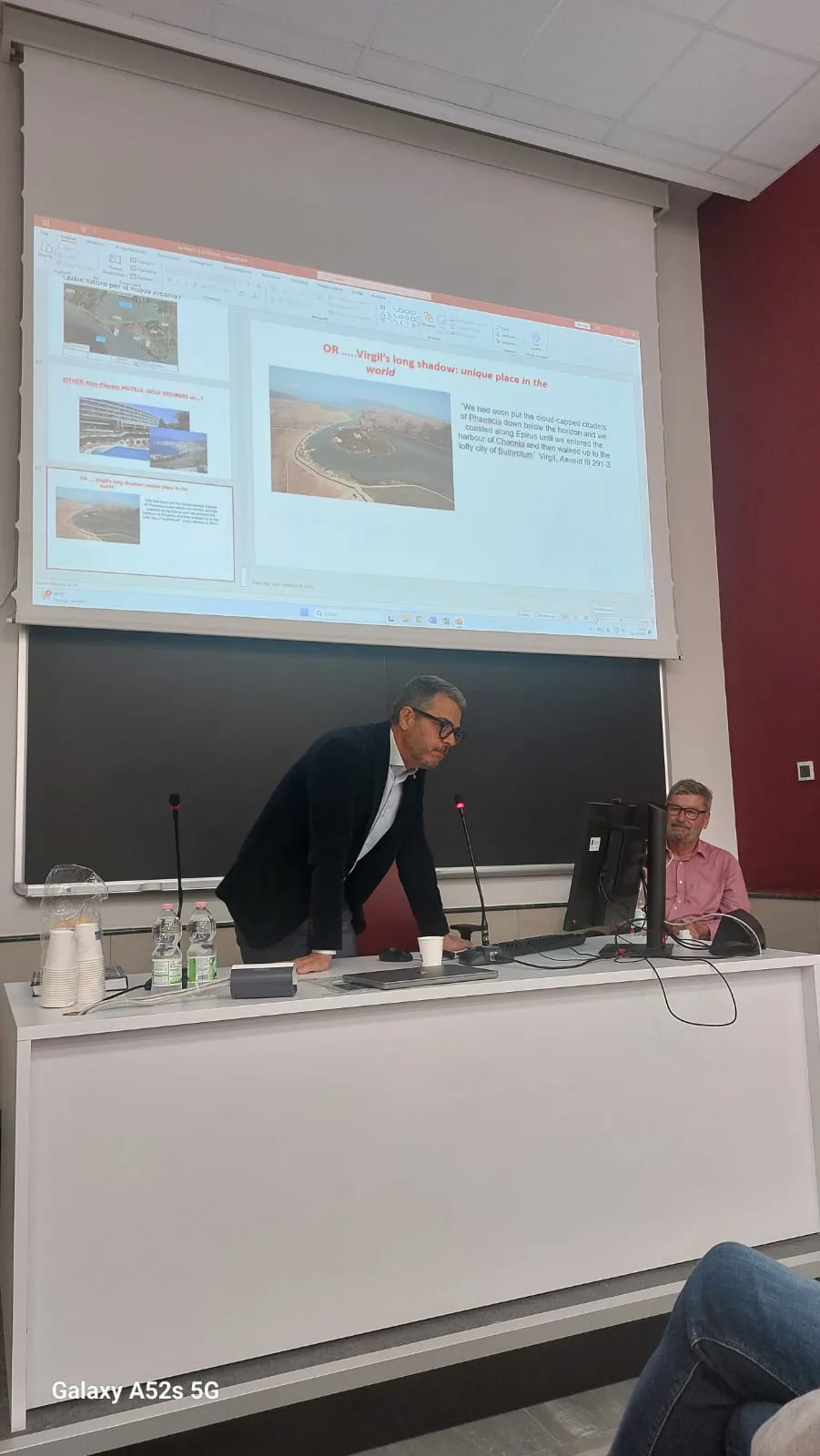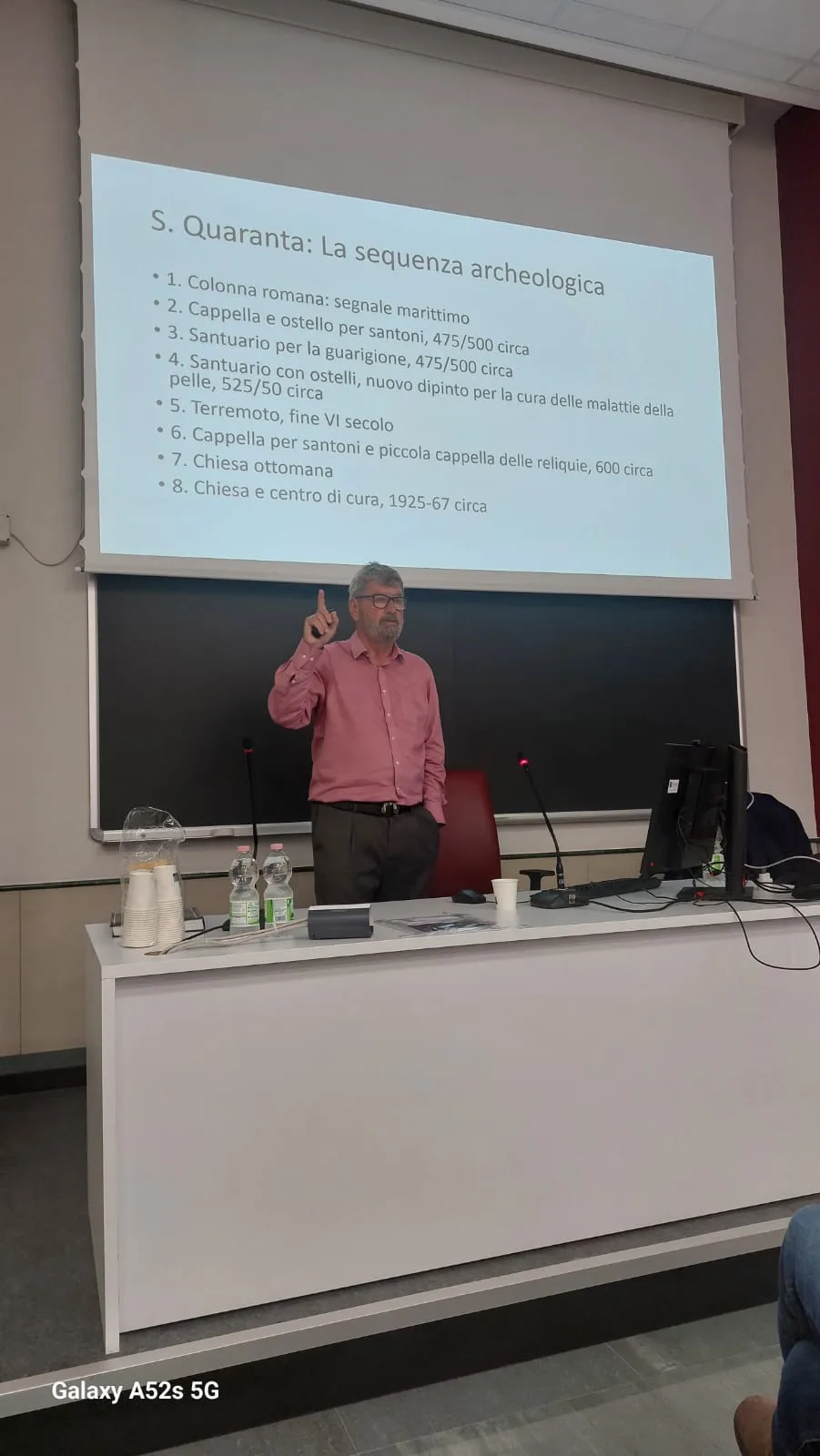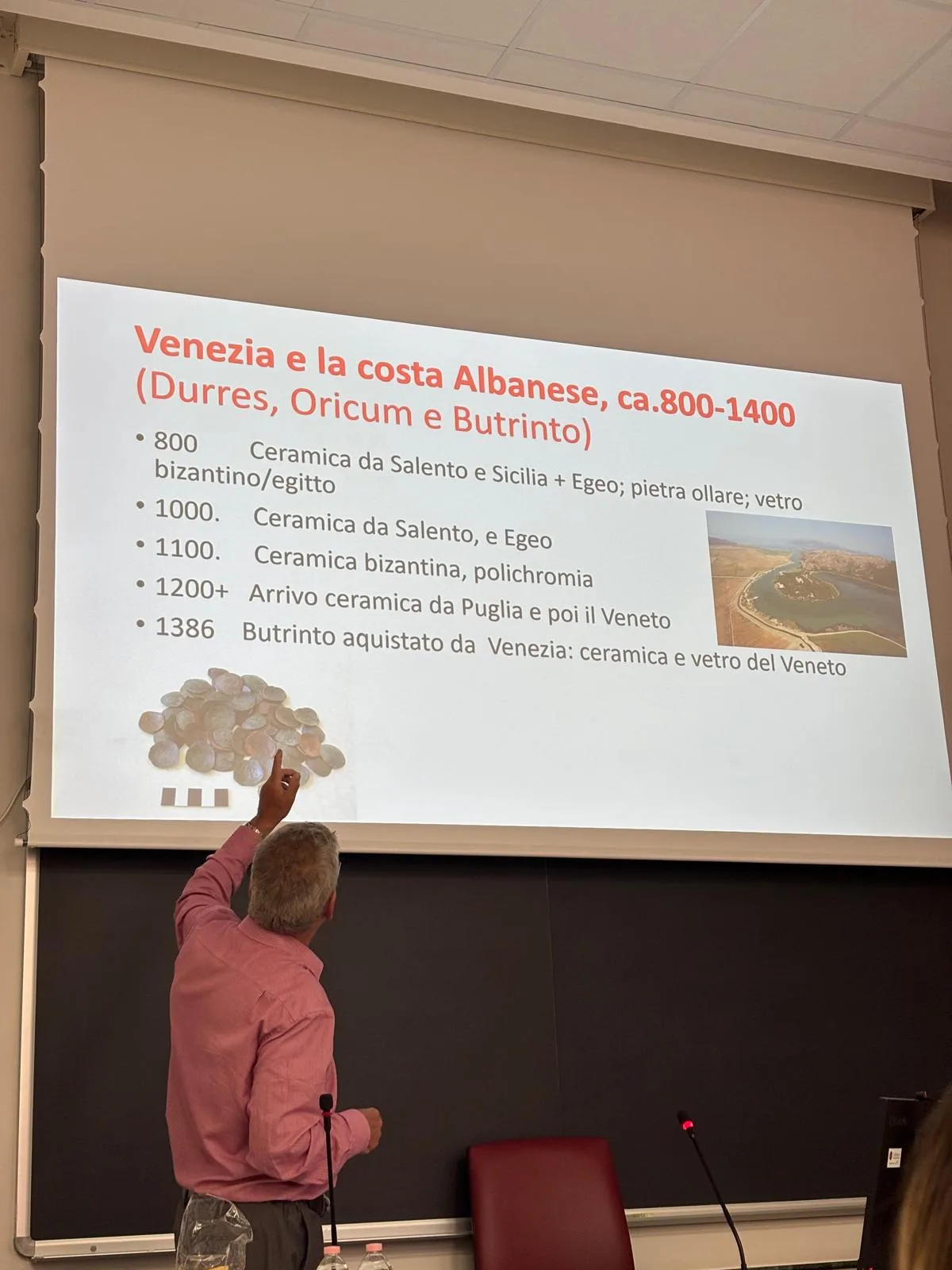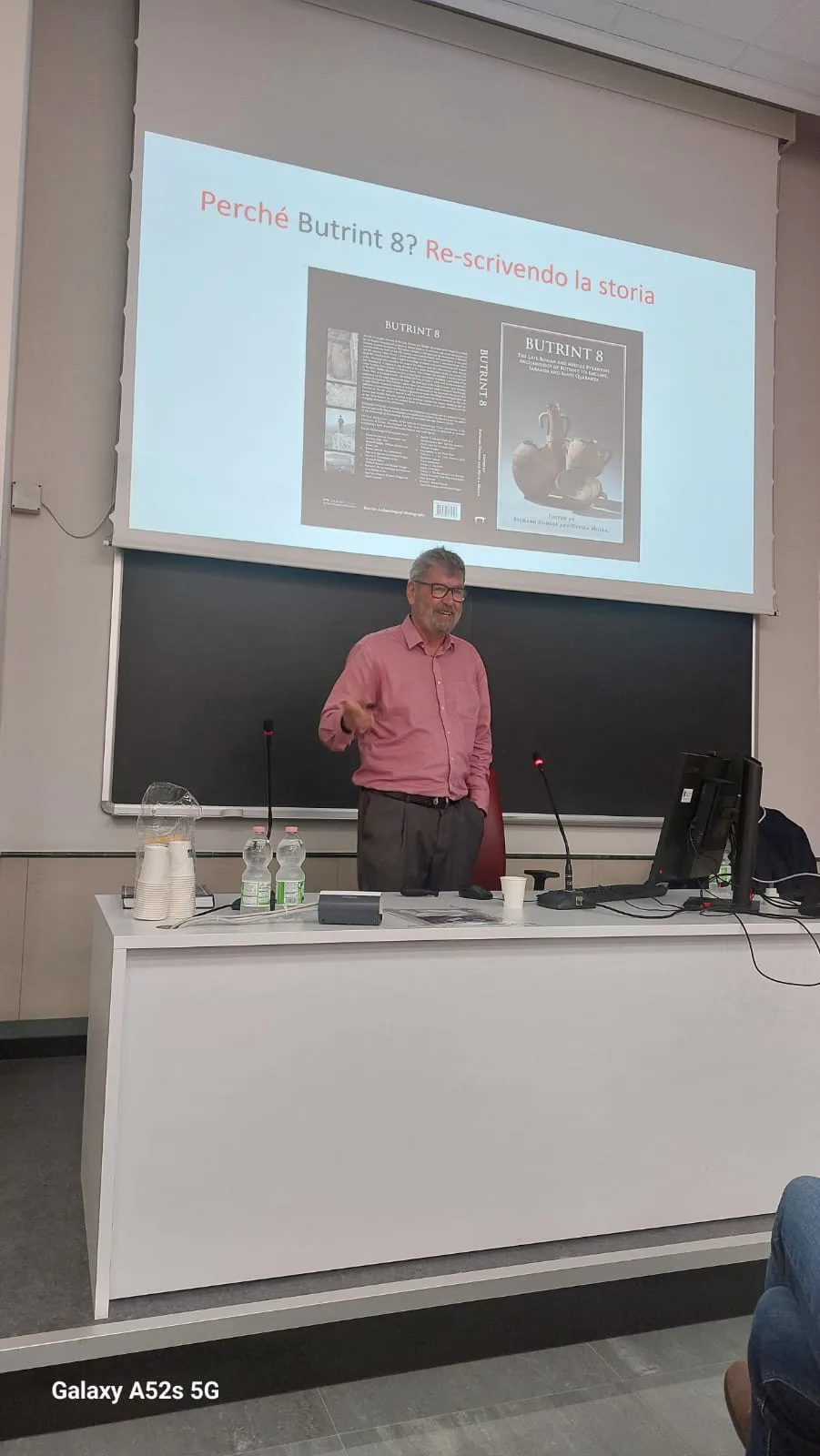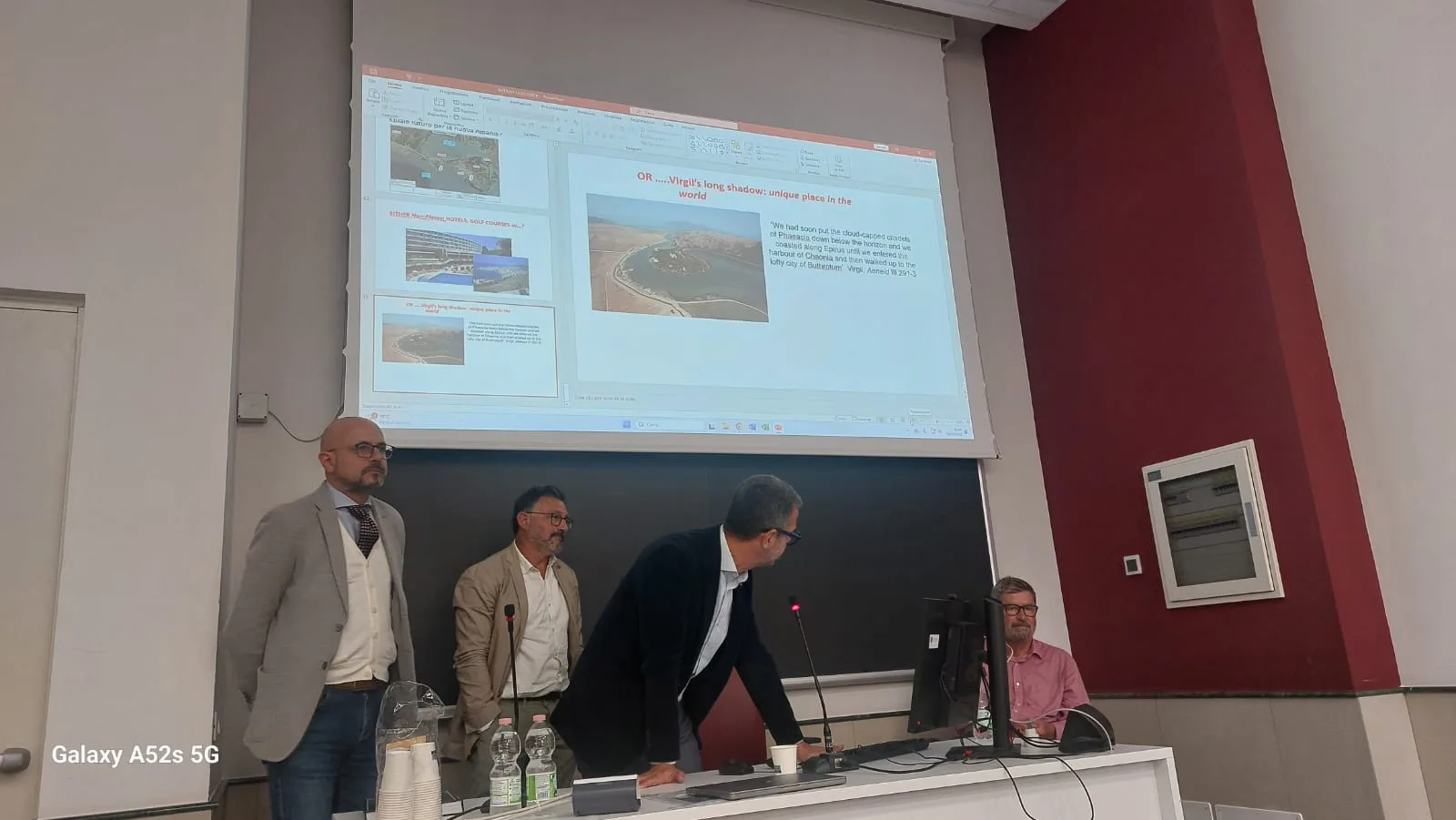
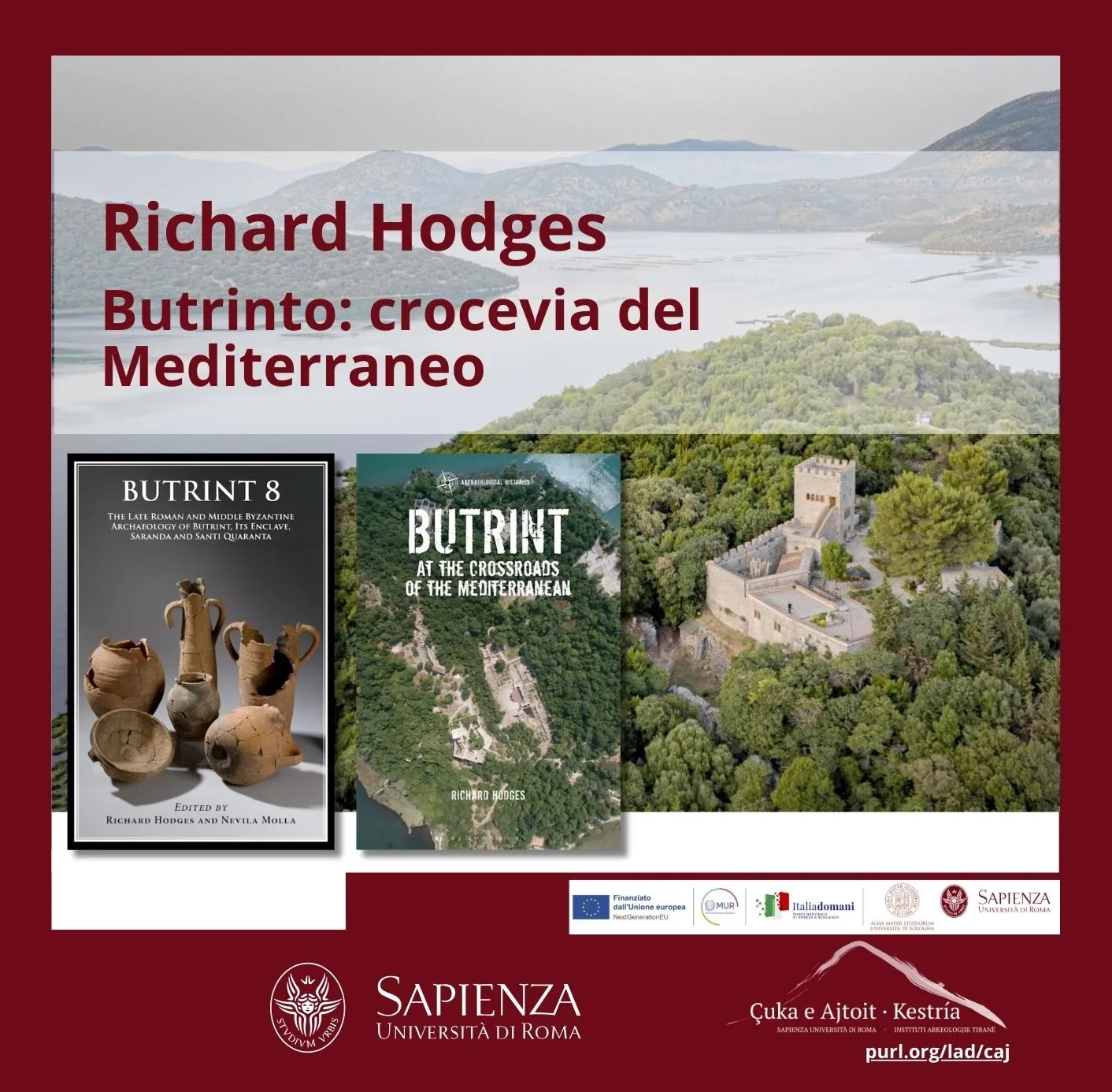
The Sapienza Archaeological Mission in Albania, as part of the PRIN 2022 FortNet project, is pleased to host a meeting with Richard Hodges on “Butrint: crossroads of the Mediterranean”, on the occasion of the recent publication of the volumes:
- Butrint 8. The Late Roman and Middle Byzantine Archaeology of Butrint, its Enclave, Saranda and Santi Quaranta, edited by Richard Hodges and Nevila Molla (Oxbow Books, 2025), and
- Butrint. At the Crossroads of the Mediterranean by Richard Hodges (Bloomsbury 2025).
Discussing the volumes with the authors Richard Hodges and Nevila Molla will be Julian Bogdani, Enrico Giorgi, and Alessandro Taddei.
The meeting will take place on Wednesday, October 15, 2025, at 10:30 AM in Aula Simonetti, at the Faculty of Letters and Philosophy (Piazzale Aldo Moro, 5. 00185. Rome. CU003, 3rd floor).
Students and colleagues are welcome to attend.
 Richard Hodges, OBE, is President Emeritus of The American University of Rome and Professor of Archaeology at the University of East Anglia, UK; he previously served as Williams Director of the University of Pennsylvania Museum of Archaeology and Anthropology, in the United States, and Director of the British School at Rome (1988–1995). He is the author of numerous books, including Dark Age Economics, Mohammed, Charlemagne and the Origins of Europe, The Anglo-Saxon Achievement, Wall-to-Wall History, Towns and Trade in the Age of Charlemagne, Goodbye to the Vikings, and (with Riccardo Francovich) Villa to Village, all published by Bloomsbury Academic.
Among his most significant works is the San Vincenzo Project at the Benedictine monastery of San Vincenzo al Volturno, a joint project of the University of Sheffield, the British School at Rome, and the Soprintendenza del Molise. There, Hodges, together with art historian John Mitchell, made a major contribution to uncovering and placing the site’s history and culture within a European context. In the numerous accounts of these excavations, the history of architecture and art — including the well-preserved cycles of paintings in the crypt of San Vincenzo Maggiore — have been placed within the changed social and economic context of 9th-century Italy.
Hodges pursued a similar approach at the UNESCO World Heritage site of Butrint, the Greco-Roman city in southern Albania, where for over 20 years (1993-2012), representing the Butrint Foundation (Lords Rothschild and Sainsbury) and in collaboration with the Packard Humanities Institute, he developed a large-scale research programme (with numerous publications) and a parallel cultural heritage programme. The project examined all archaeological periods at the site, including the previously unknown Byzantine Middle Ages.
From 2015 to 2020, Hodges was P.I. of the ERC project nEU-Med (no. 670792) with the University of Siena, titled “The creation of economic and monetary union (7th to 12th centuries): mining, landscapes and political strategies in a Mediterranean region”. This project involved excavations at Vetricella, a 9th-11th century elite complex site near Scarlino, a study of Portus Scabris on the Tyrrhenian Sea, environmental and archaeological studies of the Pegora valley corridor, and a major analysis of early medieval Italian silver coins, aiming to identify silver mined from the Colline Metallifere.